
Personalized Metabolic Assessment
Friend
, Here's what
Your Results Reveal
Based on what you shared, here's a clear picture of what's going on.
Your Metabolic Pattern
Your metabolic pattern is Early Metabolic Resistance (EMR). Early Metabolic Resistance is what happens when the hormonal and biological systems that manage your weight, energy, and fat storage start working differently. Estrogen, cortisol, and insulin — three of your most powerful metabolic hormones — begin shifting in ways that change how your body processes food, stores fat, and responds to exercise.
The result is a metabolism that doesn’t work as efficiently as it used to, which leads to more fat stored around your waist, lower energy levels, brain fog and mood swings. However, doing more of the same things like cutting more calories and exercising more, isn’t going to fix it. In fact, that can make things worse.
The good news is that Early Metabolic Resistance is very addressable. In fact, it takes as little as three weeks for your body to begin meaningfully shifting its metabolic patterns — through effectively building lean muscle, strategically eating the right foods to lower insulin, burn stored fat, and kickstart your metabolism so it can start running efficiently again.
Your Body Mass Index (BMI)
Your BMI is:
This gives you a starting point based on your height and weight — but keep in mind, BMI only tells part of the story. It doesn't account for how much lean muscle you have, where your fat is actually sitting, or what's going on with your hormones. So take it as one data point, not the whole picture.
Underweight: <18.5
Normal weight: 18.5–24.9
Overweight: 25–29.9
Obese: 30–34.9
Severely Obese: 35–39.9
Extremely Obese: ≥40
Your 3 Key Blockers
There are three main blockers that are making it hard for you to trim down and tone up…
Visceral Fat
Most women don't realize there are actually two types of belly fat — and they behave very differently in your body.
The first is subcutaneous fat. This is the fat you can pinch — the softer, jiggly layer just under your skin around your belly, hips, thighs, and arms. It affects how you look and how your clothes fit, and while it's frustrating, it carries a lower health risk than the second type.
The second is visceral fat. Visceral fat sits deep inside your abdomen, wrapped around your internal organs. You can't see it or pinch it, but it's what causes that bloated look and makes your waistline seem to disappear. More importantly, visceral fat has been directly linked to heart disease, type 2 diabetes, high blood pressure, hormonal disruption, and chronic inflammation. This one goes beyond how you look — it's a serious health hazard.
With Early Metabolic Resistance, you're likely dealing with some degree of both. The good news is that both types of fat respond to the right approach — and that's exactly what we'll cover next.
Metabolic Shift
After 40, your metabolism doesn't just slow down — it fundamentally changes how it operates. As estrogen shifts during perimenopause and menopause, your body's ability to use fat as fuel starts to decline. Your cells also become less sensitive to insulin — and since insulin controls fat storage, your body becomes increasingly prone to storing fat, especially around your belly.
So even if you haven't changed a thing about how you eat or exercise, your body is now processing everything differently. And that means it needs a different strategy — one designed specifically for this stage.
Elevated Cortisol
Cortisol is your body's primary stress hormone — and it gets a bad rap. But here's what's important to understand: cortisol isn't the enemy. It's essential for your survival and your health.
The problem isn't cortisol itself. It's chronically elevated cortisol — and with Early Metabolic Resistance, it's likely already affecting your body right now.
When cortisol stays elevated for too long, it triggers a cascade of effects that work directly against your goals:
Increases fat storage around your belly
Breaks down lean muscle — the very tissue that keeps your metabolism running
Disrupts your sleep — which is when most of your fat burning actually happens
Accelerates skin aging
Increases mood swings and anxiety
Drives cravings for sugar and carbs, which spike insulin and signal your body to store even more fat
The good news? Chronically elevated cortisol isn't something you just have to live with. And the fix is be simpler than you might think.
Personalized Metabolic Assessment
Friend
, Here's what
Your Results Reveal
Based on what you shared, here's a clear picture of what's going on.
Your Metabolic Pattern
Your metabolic pattern is Early Metabolic Resistance (EMR). Early Metabolic Resistance is what happens when the hormonal and biological systems that manage your weight, energy, and fat storage start working differently. Estrogen, cortisol, and insulin — three of your most powerful metabolic hormones — begin shifting in ways that change how your body processes food, stores fat, and responds to exercise.
The result is a metabolism that doesn’t work as efficiently as it used to, which leads to more fat stored around your waist, lower energy levels, brain fog and mood swings. However, doing more of the same things like cutting more calories and exercising more, isn’t going to fix it. In fact, that can make things worse.
The good news is that Early Metabolic Resistance is very addressable. In fact, it takes as little as three weeks for your body to begin meaningfully shifting its metabolic patterns — through effectively building lean muscle, strategically eating the right foods to lower insulin, burn stored fat, and kickstart your metabolism so it can start running efficiently again.
Your Body Mass Index (BMI)
Your BMI is:
This gives you a starting point based on your height and weight — but keep in mind, BMI only tells part of the story. It doesn't account for how much lean muscle you have, where your fat is actually sitting, or what's going on with your hormones. So take it as one data point, not the whole picture.
Underweight: <18.5
Normal weight: 18.5–24.9
Overweight: 25–29.9
Obese: 30–34.9
Severely Obese: 35–39.9
Extremely Obese: ≥40
Your 3 Key Blockers
There are three main blockers that are making it hard for you to trim down and tone up…
Visceral Fat
Most women don't realize there are actually two types of belly fat — and they behave very differently in your body.
The first is subcutaneous fat. This is the fat you can pinch — the softer, jiggly layer just under your skin around your belly, hips, thighs, and arms. It affects how you look and how your clothes fit, and while it's frustrating, it carries a lower health risk than the second type.
The second is visceral fat. Visceral fat sits deep inside your abdomen, wrapped around your internal organs. You can't see it or pinch it, but it's what causes that bloated look and makes your waistline seem to disappear. More importantly, visceral fat has been directly linked to heart disease, type 2 diabetes, high blood pressure, hormonal disruption, and chronic inflammation. This one goes beyond how you look — it's a serious health hazard.
With Early Metabolic Resistance, you're likely dealing with some degree of both. The good news is that both types of fat respond to the right approach — and that's exactly what we'll cover next.
Metabolic Shift
After 40, your metabolism doesn't just slow down — it fundamentally changes how it operates. As estrogen shifts during perimenopause and menopause, your body's ability to use fat as fuel starts to decline. Your cells also become less sensitive to insulin — and since insulin controls fat storage, your body becomes increasingly prone to storing fat, especially around your belly.
So even if you haven't changed a thing about how you eat or exercise, your body is now processing everything differently. And that means it needs a different strategy — one designed specifically for this stage.
Elevated Cortisol
Cortisol is your body's primary stress hormone — and it gets a bad rap. But here's what's important to understand: cortisol isn't the enemy. It's essential for your survival and your health.
The problem isn't cortisol itself. It's chronically elevated cortisol — and with Early Metabolic Resistance, it's likely already affecting your body right now.
When cortisol stays elevated for too long, it triggers a cascade of effects that work directly against your goals:
Increases fat storage around your belly
Breaks down lean muscle — the very tissue that keeps your metabolism running
Disrupts your sleep — which is when most of your fat burning actually happens
Accelerates skin aging
Increases mood swings and anxiety
Drives cravings for sugar and carbs, which spike insulin and signal your body to store even more fat
The good news? Chronically elevated cortisol isn't something you just have to live with. And the fix is be simpler than you might think.
Personalized Metabolic Assessment
Friend
, Here's what
Your Results Reveal
Based on what you shared, here's a clear picture of what's going on.
Your Metabolic Pattern
Your metabolic pattern is Early Metabolic Resistance (EMR). Early Metabolic Resistance is what happens when the hormonal and biological systems that manage your weight, energy, and fat storage start working differently. Estrogen, cortisol, and insulin — three of your most powerful metabolic hormones — begin shifting in ways that change how your body processes food, stores fat, and responds to exercise.
The result is a metabolism that doesn’t work as efficiently as it used to, which leads to more fat stored around your waist, lower energy levels, brain fog and mood swings. However, doing more of the same things like cutting more calories and exercising more, isn’t going to fix it. In fact, that can make things worse.
The good news is that Early Metabolic Resistance is very addressable. In fact, it takes as little as three weeks for your body to begin meaningfully shifting its metabolic patterns — through effectively building lean muscle, strategically eating the right foods to lower insulin, burn stored fat, and kickstart your metabolism so it can start running efficiently again.
Your Body Mass Index (BMI)
Your BMI is:
This gives you a starting point based on your height and weight — but keep in mind, BMI only tells part of the story. It doesn't account for how much lean muscle you have, where your fat is actually sitting, or what's going on with your hormones. So take it as one data point, not the whole picture.
Underweight: <18.5
Normal weight: 18.5–24.9
Overweight: 25–29.9
Obese: 30–34.9
Severely Obese: 35–39.9
Extremely Obese: ≥40
Your 3 Key Blockers
There are three main blockers that are making it hard for you to trim down and tone up…
Visceral Fat
Most women don't realize there are actually two types of belly fat — and they behave very differently in your body.
The first is subcutaneous fat. This is the fat you can pinch — the softer, jiggly layer just under your skin around your belly, hips, thighs, and arms. It affects how you look and how your clothes fit, and while it's frustrating, it carries a lower health risk than the second type.
The second is visceral fat. Visceral fat sits deep inside your abdomen, wrapped around your internal organs. You can't see it or pinch it, but it's what causes that bloated look and makes your waistline seem to disappear. More importantly, visceral fat has been directly linked to heart disease, type 2 diabetes, high blood pressure, hormonal disruption, and chronic inflammation. This one goes beyond how you look — it's a serious health hazard.
With Early Metabolic Resistance, you're likely dealing with some degree of both. The good news is that both types of fat respond to the right approach — and that's exactly what we'll cover next.
Metabolic Shift
After 40, your metabolism doesn't just slow down — it fundamentally changes how it operates. As estrogen shifts during perimenopause and menopause, your body's ability to use fat as fuel starts to decline. Your cells also become less sensitive to insulin — and since insulin controls fat storage, your body becomes increasingly prone to storing fat, especially around your belly.
So even if you haven't changed a thing about how you eat or exercise, your body is now processing everything differently. And that means it needs a different strategy — one designed specifically for this stage.
Elevated Cortisol
Cortisol is your body's primary stress hormone — and it gets a bad rap. But here's what's important to understand: cortisol isn't the enemy. It's essential for your survival and your health.
The problem isn't cortisol itself. It's chronically elevated cortisol — and with Early Metabolic Resistance, it's likely already affecting your body right now.
When cortisol stays elevated for too long, it triggers a cascade of effects that work directly against your goals:
Increases fat storage around your belly
Breaks down lean muscle — the very tissue that keeps your metabolism running
Disrupts your sleep — which is when most of your fat burning actually happens
Accelerates skin aging
Increases mood swings and anxiety
Drives cravings for sugar and carbs, which spike insulin and signal your body to store even more fat
The good news? Chronically elevated cortisol isn't something you just have to live with. And the fix is be simpler than you might think.
Ready To Fix This?Here's Your Next Step…
I’ve put together a short video that walks you through exactly what this metabolic pattern means for your body — and how to tackle all three blockers, so you can restore your metabolism, lower cortisol, and optimize your hormones to get the lean, strong body you're after.
Ready To Fix This?Here's Your Next Step…
I’ve put together a short video that walks you through exactly what this metabolic pattern means for your body — and how to tackle all three blockers, so you can restore your metabolism, lower cortisol, and optimize your hormones to get the lean, strong body you're after.
Ready To Fix This?Here's Your Next Step…
I’ve put together a short video that walks you through exactly what this metabolic pattern means for your body — and how to tackle all three blockers, so you can restore your metabolism, lower cortisol, and optimize your hormones to get the lean, strong body you're after.
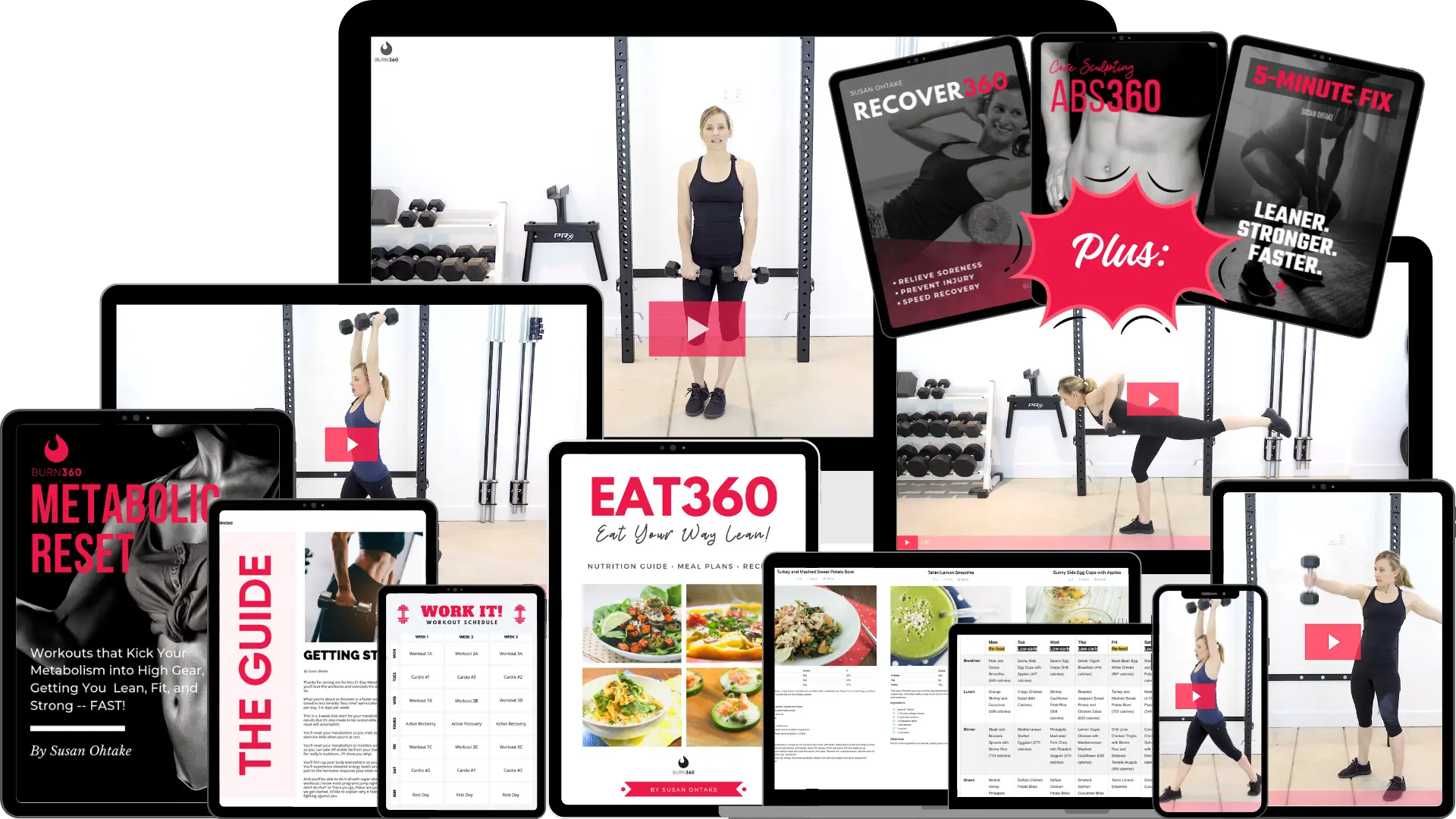
You get lifetime access to all five programs (total value $169.75) for a one-time payment of $39.95!
When you buy today, you get instant, lifetime access to all five programs (The 21-Day Metabolic Reset, Eat360, Abs360, Recover360, and The 5-Minute Fix) for a one-time payment! Access instantly on all devices -- phone, tablet, computer & smart TV.
You get lifetime access to all five programs (total value $169.75) for a one-time payment of $39.95!
When you buy today, you get instant, lifetime access to all five programs (The 21-Day Metabolic Reset, Eat360, Abs360, Recover360, and The 5-Minute Fix) for a one-time payment! Enjoy on any device -- phone, tablet, computer, and smart TV.
90-Day Money Back Guarantee!
Your order is backed by my iron-clad, 90-day, 100%, no-questions-asked money back guarantee! If you do the program and don't start leaning out and toning up faster than you ever have before, or, if for any reason you aren't satisfied, I don't want your money! Simply contact me within 90 days of your purchase. It’s really that simple and there is no "catch." I’m doing this because I'm genuinely invested in helping you get fit and healthy. It’s my passion! I want you to feel completely comfortable ordering, even if you're not totally convinced and need to get your hands on the program to try it first.
Real Women. Real Results.
Women all over the world are getting results with the Burn360 21-Day Metabolic Reset. Now it's your turn.
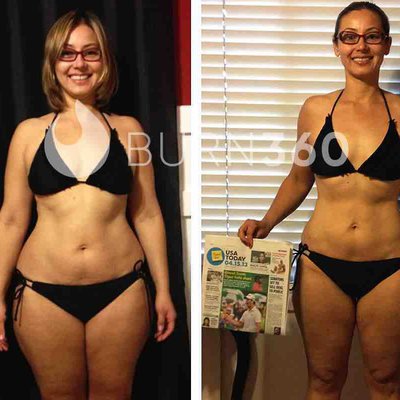
Liz, 35
Covina, California
I've been working out forever (or at least it feels that way). Just in the past 4 years I had my third & last boy. I've been working out religiously 5-6 times a week — TONS of cardio). I even ran 3 half marathons and 3 mudruns!! I quickly realized I was so burned out from doing long hours of cardio, not losing weight, not getting stronger or toning, feeling aches and pains and of course running out of time in my day. When I found your program I loved that it was short and that I could actually workout from home. At first, my workouts started at home then I had to actually move to the gym because I needed HEAVIER weights!! Unbelievable!!
When I would read your email newsletters about nutrition recommendations, I started finding more and more resources that helped really clean up my diet. Something had to give! I realized I was addicted to sugar and refined carbs. I cut out grains & most sugar and I could not believe my eyes how quickly the fat started to melt with your routines!!!
Trying Burn360 was hard for me at first, being that I was such a hamster on the wheel about cardio. I said, "I'll give this a try," because what I had been doing for years wasn't working. Time to try something new!
My favorite thing about Burn360 is the use of free weights and body weight. I feel that this program has gotten me stronger than I have ever been. I thought I was just the type that couldn't build muscle. Boy was I wrong about that! I'm so ecstatic to lift weights now and could care less about long hours of cardio. I also love how I get a full body HIGH INTENSITY workout in a short time — 30 minutes at the most!
From the time I started, I've lost 22 pounds. My starting weight was 180.8 lbs and my current weight is 158.8 lbs. I'm ready for the next challenge!! I have 20 lbs more to go and I will do it with Burn360!! Can't wait!!
* Weight loss varies by individual. You may not achieve similar results.
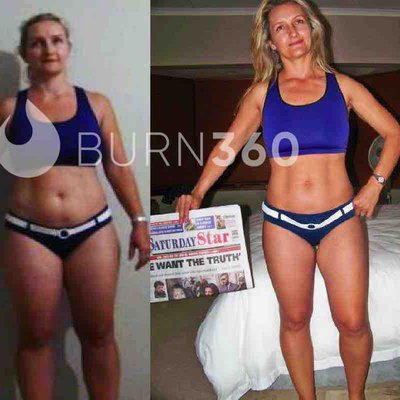
Hanneline, 38
South Africa
After having 2 children I have been riding the roller coaster of gaining weight and losing weight and then gaining weight again. I have never been able to maintain my goal weight for a very long period. I will gain weight gradually and before I know it I will be back where I started. 2 years ago a very good friend of mine, Vicky Delport, and personal trainer helped me to lose weight by combining cardio and weight resistant training (gym). I must say that is absolutely the way to go.
There is no easy way or quick fix in losing weight. I had to work very hard. In the morning I would go to gym for 1.5 hours and then later in the day I go back and do 1 hour of cardio. I would cut out fat and sugar here and there and that would be it.
After a few months I would combine cardio and gym into 1.5 hours. I did lose a lot of weight with the support of my personal trainer. The winter months came and my little daughter caught the flu at the crèche on an ongoing basis and as a result I would also be sick most of the time. I exercised less and less and eventually stopped. A year later and I have gained almost all the weight back again.
In the meanwhile life has become so busy between my children in school, activities after school and being an artist that having spare time became somewhat of a luxury.
I knew I had to start the process all over again in losing weight but I also knew that I just don’t have 1.5 to 2.5 hours anymore to exercise. And although I knew I have a strong mind to do something, the idea of doing it all over again just finally left me discouraged and without energy to attempt any kind of effort.
I was caught between two worlds. I definitely don’t want to grow old overweight and unfit not being able to enjoy life to the full with my children but thinking of the hard work and discipline just left me discouraged, without energy and even depressed.
Completing the program made me realize I can still achieve my goals. I have lost 9kg and 31cm. I almost couldn’t wear the same pants for the ‘after photo’ because it felt so loose. I am 4kg away from my goal weight. This is a program for life because it’s realistic and hard work but it is easy maintainable because it’s only 30 min per day, sometimes less. And all you need are a pair of dumbbells. I also value the ongoing support I got from day one.
This program is not just about losing weight. It’s a life changing experience. It’s more than full body high intensity workouts that’s 100% successful and full of promising results. It’s about seeing exercise, food and health in a different light. It becomes a way of life. I feel more energetic, healthier and physically very strong. I feel able to enjoy any kind of sport (coaching hockey at school for 10 year olds and they battle to keep up with me) and I feel very flexible.
Thank you for not just creating a great program but for being someone that really shows an interest in people’s health, fitness and over all well being, I will ever be grateful to you and recommend this program to anyone that wants to live a fit, lean and healthy life.
* Weight loss varies by individual. You may not achieve similar results.
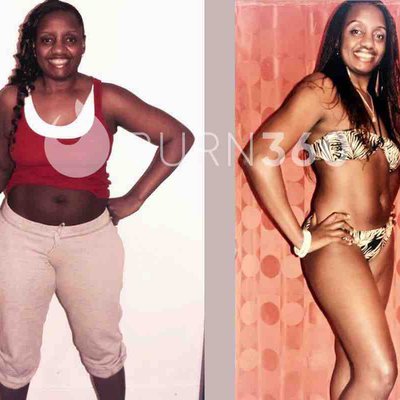
Tsitsi
Silver Spring, Maryland
When I started the program I couldn’t do a single push-up. Not on my knees, not in my dreams. I had never lifted anything beyond a pink dumbbell of 5 lb I’d never attempted a pull up and my version of squats were more like taking a slight dip at the knees. Yet I kept with the exercises, no matter how they scared me at first, I tried, and tried.
By the end of the 1st 3 weeks I was doing knee push-ups! Me! All 222 lbs of me! Things started changing as I got stronger and I found less need to substitute exercises to easier sets. Next I found myself wanting to push myself even further - incredible. Pretty soon I’d finished.
Then came the dailies. A whole new world. Susan has somehow managed to keep the exercises new. I was introduced at some point to something called the Turkish Get Up - pure fun explaining what that is to other people! I also learned, I never imagined I’d ever say this, to love burpees!!! Along with learning new exercises I never thought I could be capable of I also shared my journey with the “regulars” in the community who bring humor, support, great information, suggestions, and “roarrrs” to pump you through it. That became more than motivation for me to workout so I could share my “bloody” tale with my brothers and sisters in arms. I still do the dailies and I’m now at the 72 lbs mark of weight loss since I entered Susan’s world! Basically I have lost 1/3 of the person I was! A year in transformation!
I turn 40 in 2 weeks and the gift of my body, health, life, and emotional healing is probably the best gift I could give myself (ok and a trip to the Bahamas). I’m excited, I’m pumped, I just had a successful neck surgery 2 days ago, and I’m at my healthiest weight and I’ve never been stronger. Looking forward to going back to dailies when I’m cleared! Oh and about the push-ups I couldn’t do when I started, I now do 30 on my toes… as part of my warm up.
This woman (in a bikini now!), wife, and mother of 2 thanks you Susan, my family thanks you!
* Weight loss varies by individual. You may not achieve similar results.
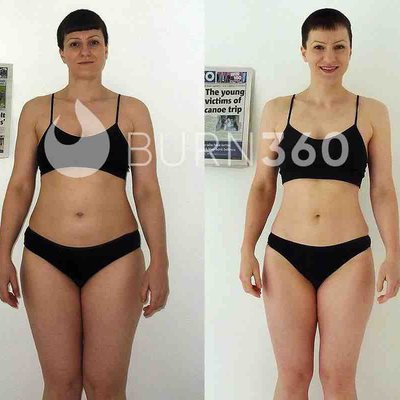
Kirsten, 40
United Kingdom
I turned 40 this year. I have never been really fat, but for most of my life I have been trying to lose weight. I knew all about eating healthy and have tried various food regiments, including eating macrobiotic, vegetarian, vegan and raw.
In the past few years I also started exercising more, doing a lot of aerobics, exercise machine training and lately running. At one point I was running one hour every day, which brought on problems with my back, but never made me lose one gram of fat! I was working so hard, but to no avail. I was frustrated.
I decided to give it a try. One last try. Getting into the workout routine wasn’t so hard for me, because I had been doing so much more (time-wasting) exercising before. I also started using a diet journal app to control my food intake and portion sizes. I realized that I may have eaten far too much – even of the “good” stuff - in the past. The nutrient patterning was also a revelation for me! Finally it all made sense.
When I started, I lost 3 kg in the first 2 weeks. This was unheard of! Over the past 20 years I hadn’t managed to lose ANY weight even though I was exercising more than anybody I knew! In total, I lost more than 8 kg over 12 weeks. I could feel that I had built up muscle, but didn’t feel like my body shape had changed that much. I took those “after” photos anyway. When I compared them with the “before” photos, I got quite a (positive!) shock! You could actually see a difference after all!
I am continuing to exercise following the Daily Workouts. I now really miss my workout if I cannot stick to my routine owing to work or travel commitments. I may never be “skinny”, but I am definitely stronger now!
* Weight loss varies by individual. You may not achieve similar results.
Love the quick, intense workouts! Who wants to spend 45-60 minutes working out? Not me! I can already tell I'm going to be sore tomorrow. That's how you know it's working! Loved it. Works both upper and lower body muscle groups in a short amount of time. I'm a fan!!

Keiva Delaney
Melbourne, Australia
This is my first week and I LOVE IT!!!!!! I've always been active but I know this will take me to the next level. I had made a goal of feeling/looking the best ever in my life when I turn 50 this July and it is certain now. So grateful.

Melanie Palmer, 50
Mason, Ohio
I'm literally on day 4 and already feel stronger. My aches and pains are going away! My hip flexor issue is getting better too. I can't believe it! Thank you!!
Lorin Grimsley
Knoxville, Tennessee
I run half and full marathons and I was still sore after these workouts! So good!
Sonya Bonar
Snohomish, Washington
This sh*t is kicking my ass and I thought I was pretty in shape already!! Can't wait until day 21 to see my progress!!

Jen Tribolet
Petaluma, California
I'm just finishing up my 3rd week of the Metabolic Reset. I'm loving the workouts, and I am feeling great! I'm also going to cancel my gym membership because I have finally found a way to be motivated to workout at home! Love these workouts!
Leigh Mclaughlin
Sheridan, Wyoming
I'm 55 & have been working out for quite few years so I've tried many plans. I have to say after first workout I was very sore but felt amazing! Love that you can do some of these sets w/ or without weights. I also love the recipes. They're actually recipes that have ingredients I have on hand. I also love the 4 min. Ab workouts!

Dawn Melanson, 55
South Hampton, New Hampshire
Almost finished with week one. The first two days I was super sore, but I powered through and I swear I can already see results in my abs and butt! I'm LOVING the fact that I'm getting results and working out a shorter amount of time! I also love the daily emails! Wonderful program so far!!!
Kelly Moras
Boca Raton, Florida
This program is kicking my butt, I love it!!! Just the boost my metabolism needs. I'm so pleased with results so far!
Kelly Bender
Springdale, Ohio
I've been doing these for 8 days and love it! Works your hard but is totally doable AND I think it's making my wonky knee stronger and hurt less.
Jen Koerner
Gardner, Kansas
Love the quick, intense workouts! Who wants to spend 45-60 minutes working out? Not me! I can already tell I'm going to be sore tomorrow. That's how you know it's working! Loved it. Works both upper and lower body muscle groups in a short amount of time. I'm a fan!!
Keiva Delaney
Melbourne, Australia
This is my first week and I LOVE IT!!!!!! I've always been active but I know this will take me to the next level. I had made a goal of feeling/looking the best ever in my life when I turn 50 this July and it is certain now. So grateful.
Melanie Palmer, 50
Mason, Ohio
I'm literally on day 4 and already feel stronger. My aches and pains are going away! My hip flexor issue is getting better too. I can't believe it! Thank you!!
Lorin Grimsley
Knoxville, Tennessee
I run half and full marathons and I was still sore after these workouts! So good!
Sonya Bonar
Snohomish, Washington
This sh*t is kicking my ass and I thought I was pretty in shape already!! Can't wait until day 21 to see my progress!!
Jen Tribolet
Petaluma, California
I'm just finishing up my 3rd week of the Metabolic Reset. I'm loving the workouts, and I am feeling great! I'm also going to cancel my gym membership because I have finally found a way to be motivated to workout at home! Love these workouts!
Leigh Mclaughlin
Sheridan, Wyoming
I'm 55 & have been working out for quite few years so I've tried many plans. I have to say after first workout I was very sore but felt amazing! Love that you can do some of these sets w/ or without weights. I also love the recipes. They're actually recipes that have ingredients I have on hand. I also love the 4 min. Ab workouts!
Dawn Melanson, 55
South Hampton, New Hampshire
Almost finished with week one. The first two days I was super sore, but I powered through and I swear I can already see results in my abs and butt! I'm LOVING the fact that I'm getting results and working out a shorter amount of time! I also love the daily emails! Wonderful program so far!!!
Kelly Moras
Boca Raton, Florida
This program is kicking my butt, I love it!!! Just the boost my metabolism needs. I'm so pleased with results so far!
Kelly Bender
Springdale, Ohio
I've been doing these for 8 days and love it! Works your hard but is totally doable AND I think it's making my wonky knee stronger and hurt less.
Jen Koerner
Gardner, Kansas
Love the quick, intense workouts! Who wants to spend 45-60 minutes working out? Not me! I can already tell I'm going to be sore tomorrow. That's how you know it's working! Loved it. Works both upper and lower body muscle groups in a short amount of time. I'm a fan!!
Keiva Delaney
Melbourne, Australia
This is my first week and I LOVE IT!!!!!! I've always been active but I know this will take me to the next level. I had made a goal of feeling/looking the best ever in my life when I turn 50 this July and it is certain now. So grateful.
Melanie Palmer, 50
Mason, Ohio
I'm literally on day 4 and already feel stronger. My aches and pains are going away! My hip flexor issue is getting better too. I can't believe it! Thank you!!
Lorin Grimsley
Knoxville, Tennessee
I run half and full marathons and I was still sore after these workouts! So good!
Sonya Bonar
Snohomish, Washington
This sh*t is kicking my ass and I thought I was pretty in shape already!! Can't wait until day 21 to see my progress!!
Jen Tribolet
Petaluma, California
I'm just finishing up my 3rd week of the Metabolic Reset. I'm loving the workouts, and I am feeling great! I'm also going to cancel my gym membership because I have finally found a way to be motivated to workout at home! Love these workouts!
Leigh Mclaughlin
Sheridan, Wyoming
I'm 55 & have been working out for quite few years so I've tried many plans. I have to say after first workout I was very sore but felt amazing! Love that you can do some of these sets w/ or without weights. I also love the recipes. They're actually recipes that have ingredients I have on hand. I also love the 4 min. Ab workouts!
Dawn Melanson, 55
South Hampton, New Hampshire
Almost finished with week one. The first two days I was super sore, but I powered through and I swear I can already see results in my abs and butt! I'm LOVING the fact that I'm getting results and working out a shorter amount of time! I also love the daily emails! Wonderful program so far!!!
Kelly Moras
Boca Raton, Florida
This program is kicking my butt, I love it!!! Just the boost my metabolism needs. I'm so pleased with results so far!
Kelly Bender
Springdale, Ohio
I've been doing these for 8 days and love it! Works your hard but is totally doable AND I think it's making my wonky knee stronger and hurt less.
Jen Koerner
Gardner, Kansas
Love the quick, intense workouts! Who wants to spend 45-60 minutes working out? Not me! I can already tell I'm going to be sore tomorrow. That's how you know it's working! Loved it. Works both upper and lower body muscle groups in a short amount of time. I'm a fan!!
Keiva Delaney
Melbourne, Australia
This is my first week and I LOVE IT!!!!!! I've always been active but I know this will take me to the next level. I had made a goal of feeling/looking the best ever in my life when I turn 50 this July and it is certain now. So grateful.
Melanie Palmer, 50
Mason, Ohio
I'm literally on day 4 and already feel stronger. My aches and pains are going away! My hip flexor issue is getting better too. I can't believe it! Thank you!!
Lorin Grimsley
Knoxville, Tennessee
I run half and full marathons and I was still sore after these workouts! So good!
Sonya Bonar
Snohomish, Washington
This sh*t is kicking my ass and I thought I was pretty in shape already!! Can't wait until day 21 to see my progress!!
Jen Tribolet
Petaluma, California
I'm just finishing up my 3rd week of the Metabolic Reset. I'm loving the workouts, and I am feeling great! I'm also going to cancel my gym membership because I have finally found a way to be motivated to workout at home! Love these workouts!
Leigh Mclaughlin
Sheridan, Wyoming
I'm 55 & have been working out for quite few years so I've tried many plans. I have to say after first workout I was very sore but felt amazing! Love that you can do some of these sets w/ or without weights. I also love the recipes. They're actually recipes that have ingredients I have on hand. I also love the 4 min. Ab workouts!
Dawn Melanson, 55
South Hampton, New Hampshire
Almost finished with week one. The first two days I was super sore, but I powered through and I swear I can already see results in my abs and butt! I'm LOVING the fact that I'm getting results and working out a shorter amount of time! I also love the daily emails! Wonderful program so far!!!
Kelly Moras
Boca Raton, Florida
This program is kicking my butt, I love it!!! Just the boost my metabolism needs. I'm so pleased with results so far!
Kelly Bender
Springdale, Ohio
I've been doing these for 8 days and love it! Works your hard but is totally doable AND I think it's making my wonky knee stronger and hurt less.
Jen Koerner
Gardner, Kansas
Love the quick, intense workouts! Who wants to spend 45-60 minutes working out? Not me! I can already tell I'm going to be sore tomorrow. That's how you know it's working! Loved it. Works both upper and lower body muscle groups in a short amount of time. I'm a fan!!
Keiva Delaney
Melbourne, Australia
This is my first week and I LOVE IT!!!!!! I've always been active but I know this will take me to the next level. I had made a goal of feeling/looking the best ever in my life when I turn 50 this July and it is certain now. So grateful.
Melanie Palmer, 50
Mason, Ohio
I'm literally on day 4 and already feel stronger. My aches and pains are going away! My hip flexor issue is getting better too. I can't believe it! Thank you!!
Lorin Grimsley
Knoxville, Tennessee
I run half and full marathons and I was still sore after these workouts! So good!
Sonya Bonar
Snohomish, Washington
This sh*t is kicking my ass and I thought I was pretty in shape already!! Can't wait until day 21 to see my progress!!
Jen Tribolet
Petaluma, California
I'm just finishing up my 3rd week of the Metabolic Reset. I'm loving the workouts, and I am feeling great! I'm also going to cancel my gym membership because I have finally found a way to be motivated to workout at home! Love these workouts!
Leigh Mclaughlin
Sheridan, Wyoming
I'm 55 & have been working out for quite few years so I've tried many plans. I have to say after first workout I was very sore but felt amazing! Love that you can do some of these sets w/ or without weights. I also love the recipes. They're actually recipes that have ingredients I have on hand. I also love the 4 min. Ab workouts!
Dawn Melanson, 55
South Hampton, New Hampshire
Almost finished with week one. The first two days I was super sore, but I powered through and I swear I can already see results in my abs and butt! I'm LOVING the fact that I'm getting results and working out a shorter amount of time! I also love the daily emails! Wonderful program so far!!!
Kelly Moras
Boca Raton, Florida
This program is kicking my butt, I love it!!! Just the boost my metabolism needs. I'm so pleased with results so far!
Kelly Bender
Springdale, Ohio
I've been doing these for 8 days and love it! Works your hard but is totally doable AND I think it's making my wonky knee stronger and hurt less.
Jen Koerner
Gardner, Kansas
Love the quick, intense workouts! Who wants to spend 45-60 minutes working out? Not me! I can already tell I'm going to be sore tomorrow. That's how you know it's working! Loved it. Works both upper and lower body muscle groups in a short amount of time. I'm a fan!!
Keiva Delaney
Melbourne, Australia
This is my first week and I LOVE IT!!!!!! I've always been active but I know this will take me to the next level. I had made a goal of feeling/looking the best ever in my life when I turn 50 this July and it is certain now. So grateful.
Melanie Palmer, 50
Mason, Ohio
I'm literally on day 4 and already feel stronger. My aches and pains are going away! My hip flexor issue is getting better too. I can't believe it! Thank you!!
Lorin Grimsley
Knoxville, Tennessee
I run half and full marathons and I was still sore after these workouts! So good!
Sonya Bonar
Snohomish, Washington
This sh*t is kicking my ass and I thought I was pretty in shape already!! Can't wait until day 21 to see my progress!!
Jen Tribolet
Petaluma, California
I'm just finishing up my 3rd week of the Metabolic Reset. I'm loving the workouts, and I am feeling great! I'm also going to cancel my gym membership because I have finally found a way to be motivated to workout at home! Love these workouts!
Leigh Mclaughlin
Sheridan, Wyoming
I'm 55 & have been working out for quite few years so I've tried many plans. I have to say after first workout I was very sore but felt amazing! Love that you can do some of these sets w/ or without weights. I also love the recipes. They're actually recipes that have ingredients I have on hand. I also love the 4 min. Ab workouts!
Dawn Melanson, 55
South Hampton, New Hampshire
Almost finished with week one. The first two days I was super sore, but I powered through and I swear I can already see results in my abs and butt! I'm LOVING the fact that I'm getting results and working out a shorter amount of time! I also love the daily emails! Wonderful program so far!!!
Kelly Moras
Boca Raton, Florida
This program is kicking my butt, I love it!!! Just the boost my metabolism needs. I'm so pleased with results so far!
Kelly Bender
Springdale, Ohio
I've been doing these for 8 days and love it! Works your hard but is totally doable AND I think it's making my wonky knee stronger and hurt less.
Jen Koerner
Gardner, Kansas
Love the quick, intense workouts! Who wants to spend 45-60 minutes working out? Not me! I can already tell I'm going to be sore tomorrow. That's how you know it's working! Loved it. Works both upper and lower body muscle groups in a short amount of time. I'm a fan!!
Keiva Delaney
Melbourne, Australia
This is my first week and I LOVE IT!!!!!! I've always been active but I know this will take me to the next level. I had made a goal of feeling/looking the best ever in my life when I turn 50 this July and it is certain now. So grateful.
Melanie Palmer, 50
Mason, Ohio
I'm literally on day 4 and already feel stronger. My aches and pains are going away! My hip flexor issue is getting better too. I can't believe it! Thank you!!
Lorin Grimsley
Knoxville, Tennessee
I run half and full marathons and I was still sore after these workouts! So good!
Sonya Bonar
Snohomish, Washington
This sh*t is kicking my ass and I thought I was pretty in shape already!! Can't wait until day 21 to see my progress!!
Jen Tribolet
Petaluma, California
I'm just finishing up my 3rd week of the Metabolic Reset. I'm loving the workouts, and I am feeling great! I'm also going to cancel my gym membership because I have finally found a way to be motivated to workout at home! Love these workouts!
Leigh Mclaughlin
Sheridan, Wyoming
I'm 55 & have been working out for quite few years so I've tried many plans. I have to say after first workout I was very sore but felt amazing! Love that you can do some of these sets w/ or without weights. I also love the recipes. They're actually recipes that have ingredients I have on hand. I also love the 4 min. Ab workouts!
Dawn Melanson, 55
South Hampton, New Hampshire
Almost finished with week one. The first two days I was super sore, but I powered through and I swear I can already see results in my abs and butt! I'm LOVING the fact that I'm getting results and working out a shorter amount of time! I also love the daily emails! Wonderful program so far!!!
Kelly Moras
Boca Raton, Florida
This program is kicking my butt, I love it!!! Just the boost my metabolism needs. I'm so pleased with results so far!
Kelly Bender
Springdale, Ohio
I've been doing these for 8 days and love it! Works your hard but is totally doable AND I think it's making my wonky knee stronger and hurt less.
Jen Koerner
Gardner, Kansas
Love the quick, intense workouts! Who wants to spend 45-60 minutes working out? Not me! I can already tell I'm going to be sore tomorrow. That's how you know it's working! Loved it. Works both upper and lower body muscle groups in a short amount of time. I'm a fan!!
Keiva Delaney
Melbourne, Australia
This is my first week and I LOVE IT!!!!!! I've always been active but I know this will take me to the next level. I had made a goal of feeling/looking the best ever in my life when I turn 50 this July and it is certain now. So grateful.
Melanie Palmer, 50
Mason, Ohio
I'm literally on day 4 and already feel stronger. My aches and pains are going away! My hip flexor issue is getting better too. I can't believe it! Thank you!!
Lorin Grimsley
Knoxville, Tennessee
I run half and full marathons and I was still sore after these workouts! So good!
Sonya Bonar
Snohomish, Washington
This sh*t is kicking my ass and I thought I was pretty in shape already!! Can't wait until day 21 to see my progress!!
Jen Tribolet
Petaluma, California
I'm just finishing up my 3rd week of the Metabolic Reset. I'm loving the workouts, and I am feeling great! I'm also going to cancel my gym membership because I have finally found a way to be motivated to workout at home! Love these workouts!
Leigh Mclaughlin
Sheridan, Wyoming
I'm 55 & have been working out for quite few years so I've tried many plans. I have to say after first workout I was very sore but felt amazing! Love that you can do some of these sets w/ or without weights. I also love the recipes. They're actually recipes that have ingredients I have on hand. I also love the 4 min. Ab workouts!
Dawn Melanson, 55
South Hampton, New Hampshire
Almost finished with week one. The first two days I was super sore, but I powered through and I swear I can already see results in my abs and butt! I'm LOVING the fact that I'm getting results and working out a shorter amount of time! I also love the daily emails! Wonderful program so far!!!
Kelly Moras
Boca Raton, Florida
This program is kicking my butt, I love it!!! Just the boost my metabolism needs. I'm so pleased with results so far!
Kelly Bender
Springdale, Ohio
I've been doing these for 8 days and love it! Works your hard but is totally doable AND I think it's making my wonky knee stronger and hurt less.
Jen Koerner
Gardner, Kansas
Love the quick, intense workouts! Who wants to spend 45-60 minutes working out? Not me! I can already tell I'm going to be sore tomorrow. That's how you know it's working! Loved it. Works both upper and lower body muscle groups in a short amount of time. I'm a fan!!
Keiva Delaney
Melbourne, Australia
This is my first week and I LOVE IT!!!!!! I've always been active but I know this will take me to the next level. I had made a goal of feeling/looking the best ever in my life when I turn 50 this July and it is certain now. So grateful.
Melanie Palmer, 50
Mason, Ohio
I'm literally on day 4 and already feel stronger. My aches and pains are going away! My hip flexor issue is getting better too. I can't believe it! Thank you!!
Lorin Grimsley
Knoxville, Tennessee
I run half and full marathons and I was still sore after these workouts! So good!
Sonya Bonar
Snohomish, Washington
This sh*t is kicking my ass and I thought I was pretty in shape already!! Can't wait until day 21 to see my progress!!
Jen Tribolet
Petaluma, California
I'm just finishing up my 3rd week of the Metabolic Reset. I'm loving the workouts, and I am feeling great! I'm also going to cancel my gym membership because I have finally found a way to be motivated to workout at home! Love these workouts!
Leigh Mclaughlin
Sheridan, Wyoming
I'm 55 & have been working out for quite few years so I've tried many plans. I have to say after first workout I was very sore but felt amazing! Love that you can do some of these sets w/ or without weights. I also love the recipes. They're actually recipes that have ingredients I have on hand. I also love the 4 min. Ab workouts!
Dawn Melanson, 55
South Hampton, New Hampshire
Almost finished with week one. The first two days I was super sore, but I powered through and I swear I can already see results in my abs and butt! I'm LOVING the fact that I'm getting results and working out a shorter amount of time! I also love the daily emails! Wonderful program so far!!!
Kelly Moras
Boca Raton, Florida
This program is kicking my butt, I love it!!! Just the boost my metabolism needs. I'm so pleased with results so far!
Kelly Bender
Springdale, Ohio
I've been doing these for 8 days and love it! Works your hard but is totally doable AND I think it's making my wonky knee stronger and hurt less.
Jen Koerner
Gardner, Kansas
Love the quick, intense workouts! Who wants to spend 45-60 minutes working out? Not me! I can already tell I'm going to be sore tomorrow. That's how you know it's working! Loved it. Works both upper and lower body muscle groups in a short amount of time. I'm a fan!!
Keiva Delaney
Melbourne, Australia
This is my first week and I LOVE IT!!!!!! I've always been active but I know this will take me to the next level. I had made a goal of feeling/looking the best ever in my life when I turn 50 this July and it is certain now. So grateful.
Melanie Palmer, 50
Mason, Ohio
I'm literally on day 4 and already feel stronger. My aches and pains are going away! My hip flexor issue is getting better too. I can't believe it! Thank you!!
Lorin Grimsley
Knoxville, Tennessee
I run half and full marathons and I was still sore after these workouts! So good!
Sonya Bonar
Snohomish, Washington
This sh*t is kicking my ass and I thought I was pretty in shape already!! Can't wait until day 21 to see my progress!!
Jen Tribolet
Petaluma, California
I'm just finishing up my 3rd week of the Metabolic Reset. I'm loving the workouts, and I am feeling great! I'm also going to cancel my gym membership because I have finally found a way to be motivated to workout at home! Love these workouts!
Leigh Mclaughlin
Sheridan, Wyoming
I'm 55 & have been working out for quite few years so I've tried many plans. I have to say after first workout I was very sore but felt amazing! Love that you can do some of these sets w/ or without weights. I also love the recipes. They're actually recipes that have ingredients I have on hand. I also love the 4 min. Ab workouts!
Dawn Melanson, 55
South Hampton, New Hampshire
Almost finished with week one. The first two days I was super sore, but I powered through and I swear I can already see results in my abs and butt! I'm LOVING the fact that I'm getting results and working out a shorter amount of time! I also love the daily emails! Wonderful program so far!!!
Kelly Moras
Boca Raton, Florida
This program is kicking my butt, I love it!!! Just the boost my metabolism needs. I'm so pleased with results so far!
Kelly Bender
Springdale, Ohio
I've been doing these for 8 days and love it! Works your hard but is totally doable AND I think it's making my wonky knee stronger and hurt less.
Jen Koerner
Gardner, Kansas
Love the quick, intense workouts! Who wants to spend 45-60 minutes working out? Not me! I can already tell I'm going to be sore tomorrow. That's how you know it's working! Loved it. Works both upper and lower body muscle groups in a short amount of time. I'm a fan!!
Keiva Delaney
Melbourne, Australia
This is my first week and I LOVE IT!!!!!! I've always been active but I know this will take me to the next level. I had made a goal of feeling/looking the best ever in my life when I turn 50 this July and it is certain now. So grateful.
Melanie Palmer, 50
Mason, Ohio
I'm literally on day 4 and already feel stronger. My aches and pains are going away! My hip flexor issue is getting better too. I can't believe it! Thank you!!
Lorin Grimsley
Knoxville, Tennessee
I run half and full marathons and I was still sore after these workouts! So good!
Sonya Bonar
Snohomish, Washington
This sh*t is kicking my ass and I thought I was pretty in shape already!! Can't wait until day 21 to see my progress!!
Jen Tribolet
Petaluma, California
I'm just finishing up my 3rd week of the Metabolic Reset. I'm loving the workouts, and I am feeling great! I'm also going to cancel my gym membership because I have finally found a way to be motivated to workout at home! Love these workouts!
Leigh Mclaughlin
Sheridan, Wyoming
I'm 55 & have been working out for quite few years so I've tried many plans. I have to say after first workout I was very sore but felt amazing! Love that you can do some of these sets w/ or without weights. I also love the recipes. They're actually recipes that have ingredients I have on hand. I also love the 4 min. Ab workouts!
Dawn Melanson, 55
South Hampton, New Hampshire
Almost finished with week one. The first two days I was super sore, but I powered through and I swear I can already see results in my abs and butt! I'm LOVING the fact that I'm getting results and working out a shorter amount of time! I also love the daily emails! Wonderful program so far!!!
Kelly Moras
Boca Raton, Florida
This program is kicking my butt, I love it!!! Just the boost my metabolism needs. I'm so pleased with results so far!
Kelly Bender
Springdale, Ohio
I've been doing these for 8 days and love it! Works your hard but is totally doable AND I think it's making my wonky knee stronger and hurt less.
Jen Koerner
Gardner, Kansas
Love the quick, intense workouts! Who wants to spend 45-60 minutes working out? Not me! I can already tell I'm going to be sore tomorrow. That's how you know it's working! Loved it. Works both upper and lower body muscle groups in a short amount of time. I'm a fan!!
Keiva Delaney
Melbourne, Australia
This is my first week and I LOVE IT!!!!!! I've always been active but I know this will take me to the next level. I had made a goal of feeling/looking the best ever in my life when I turn 50 this July and it is certain now. So grateful.
Melanie Palmer, 50
Mason, Ohio
I'm literally on day 4 and already feel stronger. My aches and pains are going away! My hip flexor issue is getting better too. I can't believe it! Thank you!!
Lorin Grimsley
Knoxville, Tennessee
I run half and full marathons and I was still sore after these workouts! So good!
Sonya Bonar
Snohomish, Washington
This sh*t is kicking my ass and I thought I was pretty in shape already!! Can't wait until day 21 to see my progress!!
Jen Tribolet
Petaluma, California
I'm just finishing up my 3rd week of the Metabolic Reset. I'm loving the workouts, and I am feeling great! I'm also going to cancel my gym membership because I have finally found a way to be motivated to workout at home! Love these workouts!
Leigh Mclaughlin
Sheridan, Wyoming
I'm 55 & have been working out for quite few years so I've tried many plans. I have to say after first workout I was very sore but felt amazing! Love that you can do some of these sets w/ or without weights. I also love the recipes. They're actually recipes that have ingredients I have on hand. I also love the 4 min. Ab workouts!
Dawn Melanson, 55
South Hampton, New Hampshire
Almost finished with week one. The first two days I was super sore, but I powered through and I swear I can already see results in my abs and butt! I'm LOVING the fact that I'm getting results and working out a shorter amount of time! I also love the daily emails! Wonderful program so far!!!
Kelly Moras
Boca Raton, Florida
This program is kicking my butt, I love it!!! Just the boost my metabolism needs. I'm so pleased with results so far!
Kelly Bender
Springdale, Ohio
I've been doing these for 8 days and love it! Works your hard but is totally doable AND I think it's making my wonky knee stronger and hurt less.
Jen Koerner
Gardner, Kansas